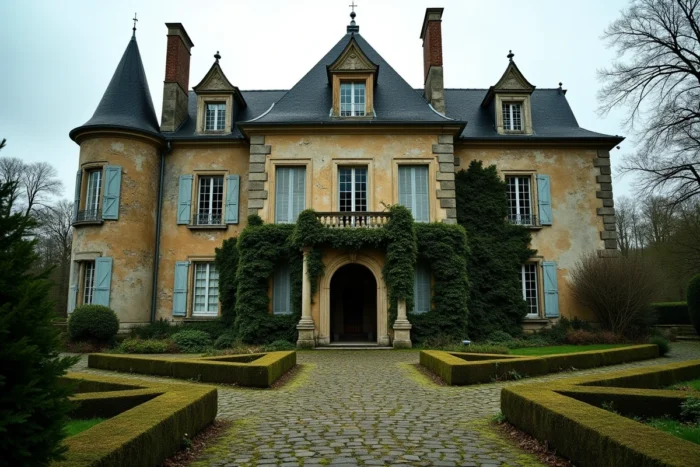
A castle sold for a symbolic 1 euro is not a gift. It is a legal arrangement in which the acquisition price is negligible, but where the buyer contractually commits to carrying out renovation work, the cost of which often far exceeds the market value of the building. These transfers concern heritage properties in a state of peril, held by local authorities or public organizations that can no longer maintain them.
Transfer taxes and tax reclassification: the hidden cost from the signature
The most common reflex is to think that a purchase for 1 euro incurs no significant notary fees. This is false. Transfer taxes are still due even at a symbolic 1 euro, and they are not necessarily calculated based on this negligible amount.
The tax administration can reclassify the transaction as a disguised donation if the actual value of the property is not documented by an appraisal or a valuation opinion. In this case, the taxes are recalculated based on the estimated value of the castle, which can represent a considerable sum.
To secure the transaction, a solid file must be produced: real estate expert report, detailed work estimates justifying the state of degradation, and an assessment of liabilities (notably the cost of bringing it into compliance). Without these documents, finding a castle for sale at 1 symbolic euro and signing the deed can turn into a tax reassessment a few years later.

Transfer agreement and usage clauses: what the contract actually imposes
The municipalities and public organizations that sell a castle at a symbolic price do not do so without conditions. The transfer contract is accompanied by a multi-year agreement that sets specific obligations on several fronts.
- A detailed usage project must be presented before the sale: tourist accommodation, third place, event space, or seminars. Simple secondary residence is generally excluded.
- A work schedule with dated phases and progress indicators is integrated into the contract. Failure to meet deadlines can result in financial penalties.
- A clause for the recovery of the property allows the community to reclaim the castle if the buyer does not meet their commitments, without compensation for the work already completed.
These agreements are signed with the transferring community and, when the castle is classified or listed as a historical monument, a complementary agreement with the Ministry of Culture governs the nature of the authorized restorations.
The trap of the underestimated project
Many candidates present an ambitious project to obtain the transfer, only to discover that the regulatory constraints on a heritage building render their initial budget unrealistic. Work on a historical monument requires specific materials and techniques, with approved artisans whose rates are significantly higher than those of the standard renovation market.
A viable project relies on realistic costing before the application, not after. Heritage architects or architects from the Buildings of France can provide a preliminary estimate, but this process has a cost that few candidates anticipate.
Obligations regarding castles classified as historical monuments in France
When a castle sold for 1 euro is classified or listed as a historical monument, the constraints overlap with the obligations of the transfer agreement. Every intervention on the building must receive prior authorization from the Regional Directorate of Cultural Affairs (DRAC).
This authorization covers materials, techniques, colors, and even the placement of modern equipment (heating, electricity, plumbing). A replacement of the roof with synthetic slate on a classified castle will be refused. Only natural slate, installed according to traditional methods, will be accepted.
In exchange for these constraints, public subsidies exist. They can cover a portion of the restoration work, but their amount varies by region and available budget envelopes. The processing times are long, sometimes several months, which requires planning the project accordingly.
Tax exemption and heritage: a lever, not a solution
Tax exemption schemes related to historical monuments allow for the deduction of work and maintenance costs from rental income, or even from global income under certain conditions. A total exemption from inheritance tax may also apply if the property is open to the public.
These tax benefits do not compensate for a poorly sized project. Tax exemption reduces the bill, it does not finance the project. A buyer who relies on these schemes to close their renovation budget takes a major risk, as the deductible amounts are capped and the eligible works are strictly regulated.
Selection criteria for candidates by transferring communities
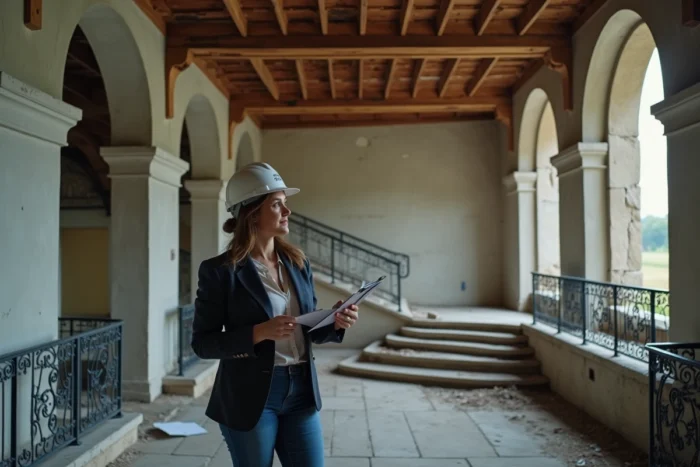
Municipalities do not sell a castle to just any candidate. The selection is based on the quality of the project, the financial solidity of the applicant, and their ability to meet the imposed schedule.
- The application file includes a complete financing plan, with own funds, planned loans, and requested subsidies.
- The candidate’s experience in heritage renovation is a differentiating criterion. An individual without a background in this area will have more difficulties than a project leader who has already restored an old building.
- The local economic impact weighs in the decision: job creation, tourist attractiveness, cultural animation of the territory.
Some communities publish formal calls for projects, while others proceed through direct negotiation. There is no centralized platform listing all 1 euro transfers in France, making active monitoring essential with municipalities, prefectures, and heritage services.
Acquiring a castle at a symbolic price remains a long-term heritage commitment. Selected candidates are those who demonstrate real financial capacity and a project rooted in the territory, not those looking for a bargain real estate deal.