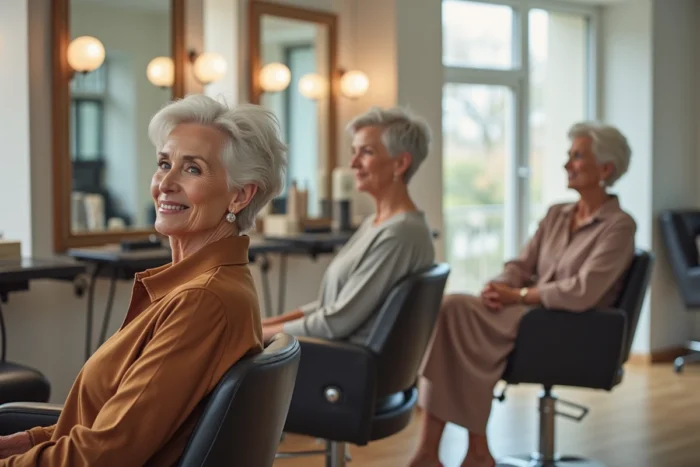
After 70, hair often loses density and hold. Choosing a suitable short hairstyle can restore volume, highlight the face, and simplify daily styling. Current trends favor texture and movement over fixed cuts. Here are ten specific styles, each designed to address a different hair or facial situation.
1. Textured Pixie on Fine Hair
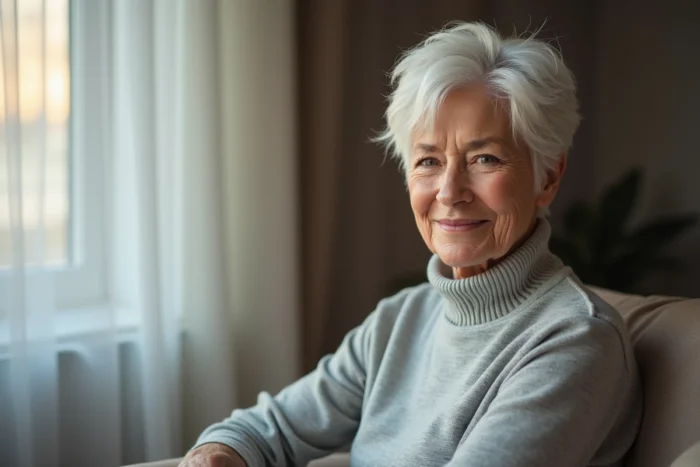
The textured pixie involves keeping the sides short and working the top of the head into irregular strands. Have you noticed that very smooth cuts flatten fine hair? Here, the stylist thins the ends and creates dimension with tight layered cuts.
Volume comes from texture, not hair thickness. A little matte wax is enough to redefine the strands each morning. This cut suits both oval and round faces, as the volume on top visually elongates the features.
2. Chin-Length French Bob with Curtain Bangs
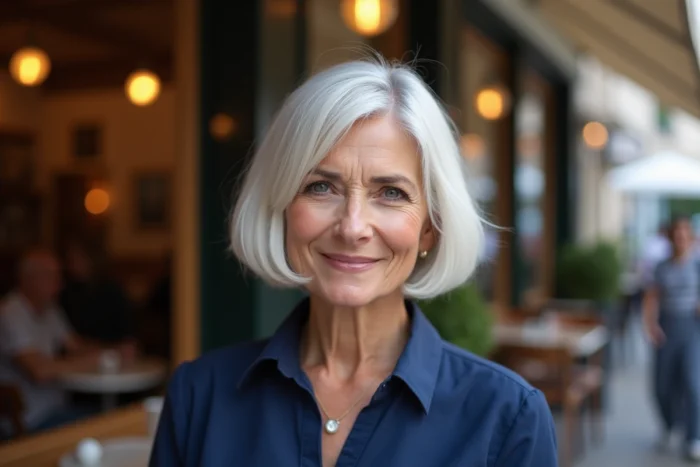
The French Bob stops at chin level and is characterized by a blunt line, slightly rounded inward. Add curtain bangs (open in the center, longer on the sides) and the gaze is framed without being weighed down.
Among the short hairstyles for women over 70, the French Bob remains one of the most versatile. It softens strong features and adapts well to both straight and wavy hair. With glasses, the curtain bangs allow the frames to be visible while balancing the upper part of the face.
3. Straight Micro Bob for Elongated Faces
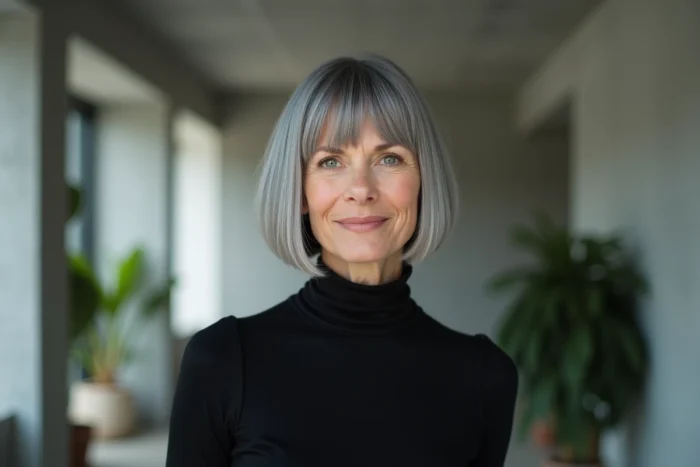
The Micro Bob is a very short bob that stops just below the ears. Its straight and sharp line creates an impression of width that compensates for an elongated or narrow face.
Why choose this over a classic bob? The Micro Bob requires little maintenance and keeps its shape even as the hair grows out. No need for a haircut every three weeks. Just smooth the ends with a blow dryer and a round brush.
4. Bixie with Movement on Top
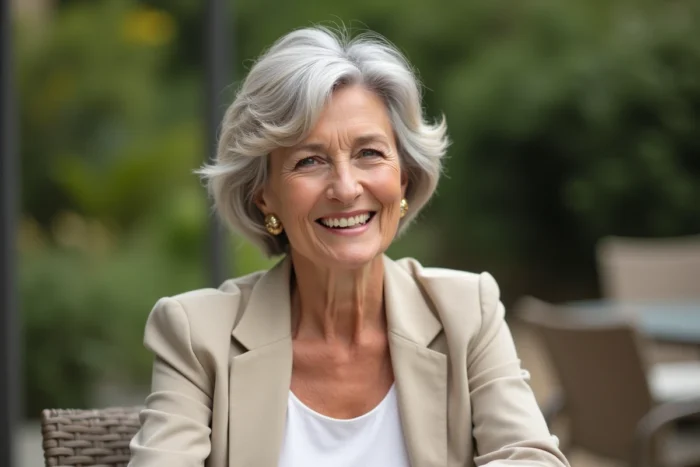
The Bixie is a hybrid between a bob and a pixie. The result: more length than a classic pixie, but less volume than a bob. The strands on top are cut in layers to create natural movement.
This cut works particularly well on white or gray hair, as the layered sections catch the light and add shine. For women who wear thick-framed glasses, the bixie frees the temples and avoids the “hair stuck behind the arms” effect.
5. Tapered Boyish Cut with Exposed Nape
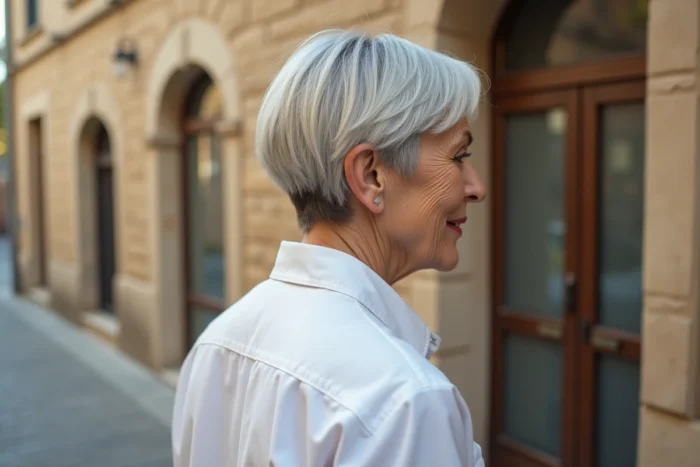
The boyish cut goes shorter than the pixie, especially on the sides and nape. An exposed nape elongates the neck and gives a straighter head posture. The top remains slightly longer to allow for some styling variations.
This style suits women who want minimal maintenance. A quick shower, a dab of light gel, and the cut is in place. Caution: on a very round face, the boyish cut can accentuate roundness if the sides are cut too short. It’s best to keep a bit of length above the ears.
6. Asymmetrical Pixie to Break Facial Symmetry
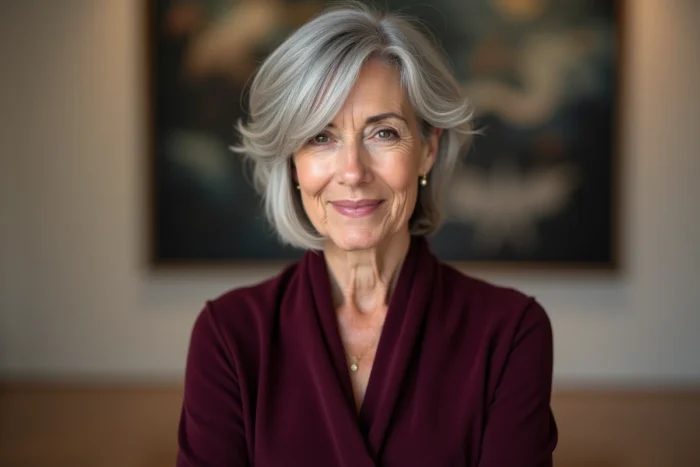
A longer strand on one side and a shorter one on the other: the asymmetrical pixie draws attention to the fuller side. This trick is useful when facial features are very symmetrical, which can give a frozen appearance.
Asymmetry adds dynamism without requiring complicated styling. It also works well with glasses, as the long strand can fall over a frame arm and create a relaxed effect.
7. Short Graduated Bob with Bright Strands
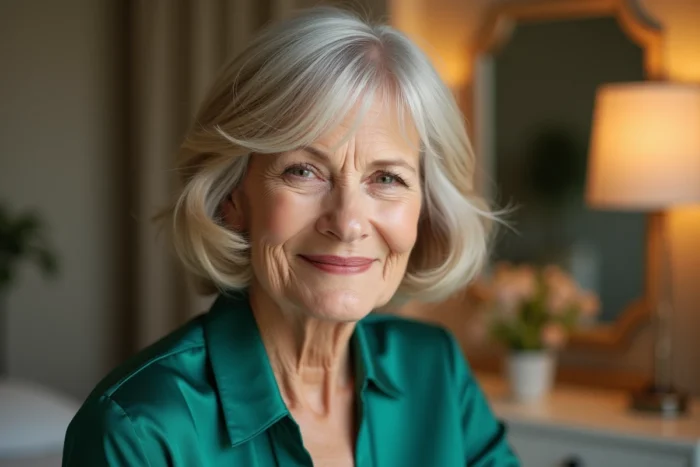
Subtle strands on white or gray hair add depth without changing color. The short graduated bob, which falls between the ear and chin, lends itself well to this technique. Lighter strands at the front brighten the complexion.
Colorists refer to “melted roots”: regrowth remains invisible for several weeks. It’s a good compromise for women who don’t want a full color but want to avoid the uniform look of pure white hair.
8. Short Tapered Cut on Naturally Curly Hair
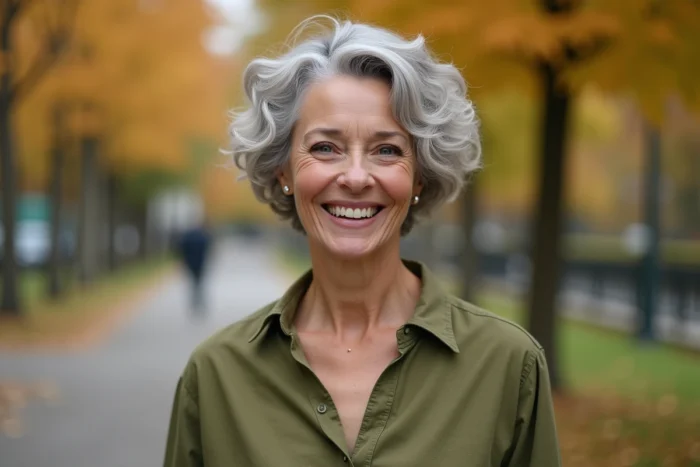
Natural curls are an asset after 70. They create volume without styling products. The key is not to cut too short: curls need length to form properly.
A tapered cut respects the spiral of curly hair. The stylist cuts strand by strand, curl by curl, to avoid the “mushroom” effect. Air drying is preferable to a blow dryer, which breaks the definition of curls.
9. Pixie with Short Bangs to Balance Bold Glasses
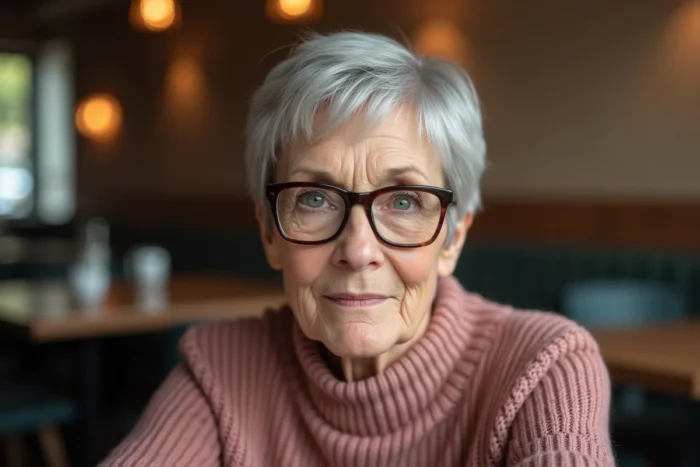
Wide or colorful frames require a cut that doesn’t compete with them. The pixie with short bangs (above the eyebrows) allows the frames to take center stage.
This duo works because the short bangs expose the forehead and highlight the eyebrows, which form a guiding line above the glasses. In contrast, long bangs that touch the frames create a visually cluttered area. Short bangs and bold frames complement each other instead of competing.
10. Textured Short Cut with Side Part
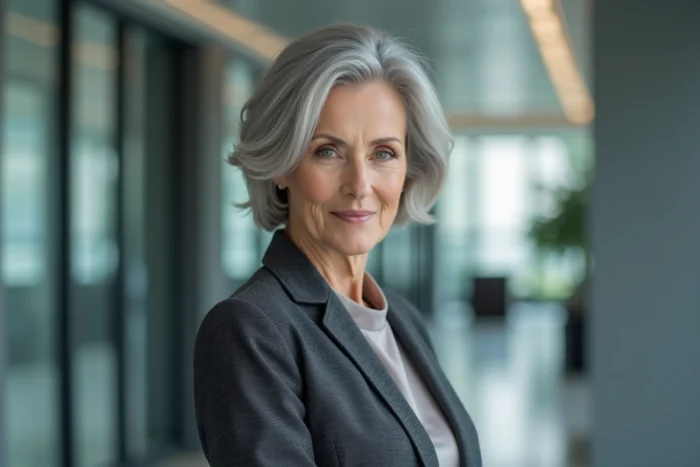
The side part is a simple gesture that changes the silhouette of a short cut. It creates a soft asymmetry, gives body to the more voluminous side, and slightly flattens the other.
On fine hair, the side part works better than a middle part, as it avoids revealing the scalp. Combined with a textured cut, with ends worked with a razor or texturizing shears, the result gives a polished style that requires only a few minutes of preparation.
Each of these ten cuts addresses a specific constraint: hair fineness, face shape, glasses wear, or desire for simplicity. The choice depends less on current trends than on the actual texture of your hair and what you are willing to do in front of the mirror each morning.