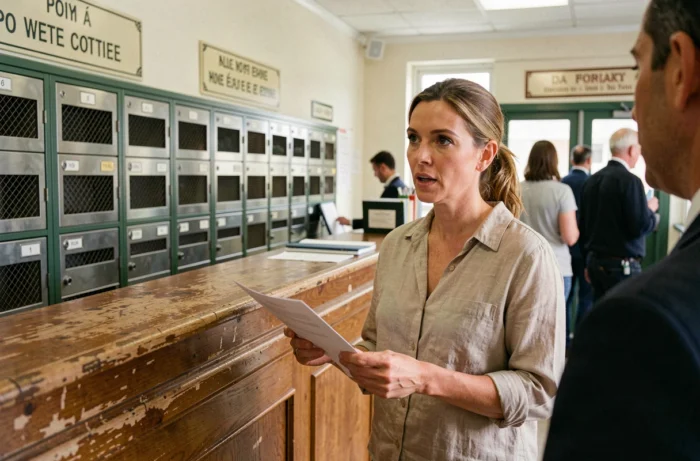
Receiving mail without having a fixed address concerns very different profiles: people without stable housing, long-term travelers, van workers, temporary expatriates, or caregivers managing someone else’s mail. Solutions exist, but they vary depending on the administrative situation and the real needs of each individual.
Administrative domiciliation: a system that goes beyond simple mail reception
Most online guides present domiciliation as a way to receive mail. This is reductive. In France, administrative domiciliation (or election of domicile) also allows one to obtain proof of residence, access social rights, register on electoral rolls, or apply for an identity card.
This system is aimed at individuals without stable housing, meaning those who do not have an address that allows them to check their mail consistently and confidentially. This includes homeless individuals, those living in mobile residences, or temporarily housed with a third party.
The process goes through a CCAS (communal social action center) or an approved organization: associations like the Red Cross, Secours Catholique, or Emmaüs. This point is rarely highlighted in content focused on La Poste, even though it opens a complementary avenue for those distanced from traditional postal circuits. Those wishing to explore options to receive their mail at the post office with Brico Déco Home will find useful insights on concrete steps.
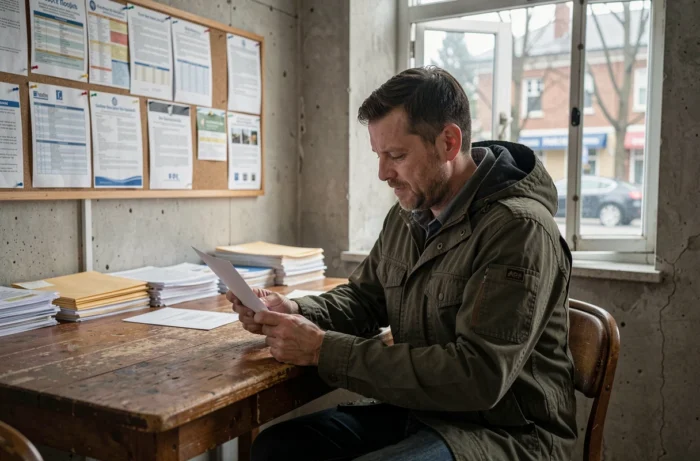
Poste restante and PO Box: two postal services with distinct uses
Poste restante and PO Box are often confused. They serve different needs.
Poste restante: a temporary solution by nature
Poste restante allows mail to be sent to a chosen post office, where it is kept for a limited time. The recipient presents an ID to collect their mail. This service is suitable for occasional travel or transitional situations.
However, poste restante does not constitute proof of residence. Therefore, it does not allow one to open a bank account or carry out administrative procedures that require a stable address.
PO Box: a subscription with a dedicated number
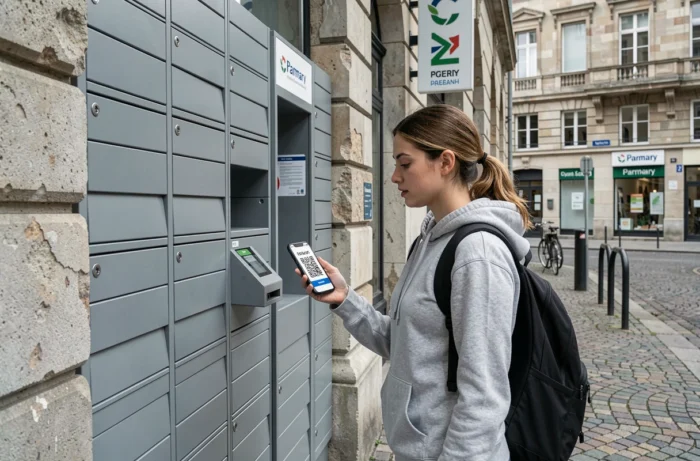
A PO Box operates on a subscription basis. It assigns a unique number to the holder, who can access their mail during the post office’s opening hours. This service is available to both individuals and professionals.
The limitations are known: a PO Box does not usually serve as proof of residence for official procedures. It remains a tool for receiving mail, not an administrative anchor.
Domiciliation with a private individual: a flexible framework but needs formalization
Domiciliation with a private individual is often an underestimated option. A person temporarily housed can use their host’s address to receive mail, provided that the agreement is explicit.
For this domiciliation to be recognized by administrations, it is generally necessary to provide:
- A hosting certificate written and signed by the host, specifying the identity of the domiciled person
- A copy of the host’s ID
- A proof of residence in the host’s name (utility bill, rent receipt)
This arrangement works for most common procedures: renewal of identity documents, opening an account, administrative registration. The agreement between the two parties must be formalized in writing to avoid any future disputes.
Field feedback varies on one point: some administrations accept the hosting certificate without difficulty, while others require additional proofs. The level of requirement varies according to the municipality and the type of procedure.
Receiving mail without an address while in international mobility
For French citizens temporarily residing abroad or individuals in long-term mobility, the question arises differently. Domiciliation in France can be maintained through a relative or a dedicated service, but it requires keeping an administrative link with an address on the territory.
Some local European administrations offer specific systems. In the Netherlands, for example, it is possible to request a briefadres (temporary postal address) from a relative or the municipality, with a formal procedure by appointment. This type of system remains little known to French-speaking expatriates.
In France, several private digital domiciliation services allow one to digitize and forward received mail to a physical address. The mail is scanned, and the holder can view their letters online. This type of service is suitable for nomadic profiles or entrepreneurs without a fixed location.
Which solution to choose based on your profile
The choice depends on the actual need: simple mail reception or complete administrative anchoring.
- Person without stable housing: domiciliation through a CCAS or an approved organization remains the only option that provides access to social rights and proof of residence
- Traveler or person in transit: poste restante covers the need for temporary reception without commitment
- Person housed with a third party: the written hosting certificate is sufficient for most procedures
- Professional or self-employed individual without a location: PO Box or commercial domiciliation provides a stable address for the activity
- Temporary expatriate: digital domiciliation services or local briefadres depending on the country of residence
None of these solutions cover all cases. Administrative domiciliation through an approved organization remains the most protective in terms of rights, but it is reserved for individuals truly without stable housing. The other systems are tools for receiving mail, not administrative substitutes.