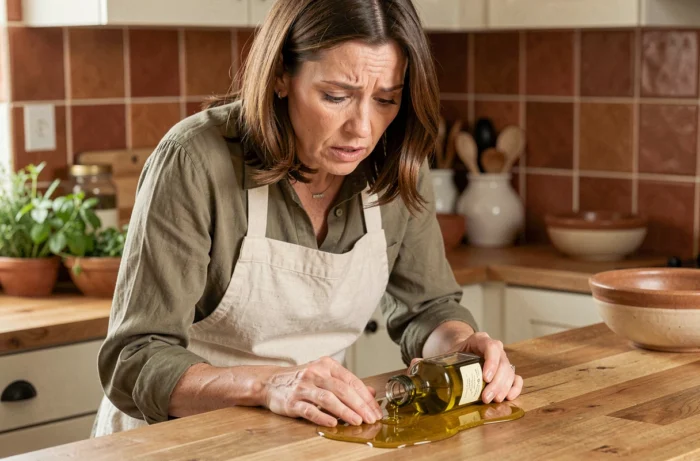
Spilling oil on the floor or kitchen table triggers, depending on the region, a superstitious grimace or a simple sigh of annoyance. Behind this seemingly innocuous gesture coexist very different interpretations: a sign of bad luck in some Mediterranean traditions, a symbol of prosperity elsewhere, or a strictly domestic issue (slippery floor, clogged pipes). This article compares these frameworks of interpretation to distinguish what pertains to belief, cultural tradition, and concrete risk.
Superstitions Related to Spilled Oil: Comparative Table by Tradition
Interpretations vary greatly from one culture to another. The table below summarizes the main interpretations associated with spilling oil, as they appear in ethnographic sources and folk tales.
| Tradition / Region | Dominant Interpretation | Associated Reparative Gesture |
|---|---|---|
| Southern Italy, Greece | Omen of bad luck or family conflict | Throwing a pinch of salt over the left shoulder |
| Maghreb | Wasting a sacred resource, sign of financial loss | Reciting a protective formula, cleaning without complaint |
| Jewish tradition (rabbinical commentaries) | Variable omen depending on the context of the dream or act | Case-by-case interpretation, no unique ritual |
| Rural France (Provence, Southwest) | Moderate bad luck, close to the superstition of spilled salt | Wipe it up and not speak of it |
| Caribbean (French Antilles) | Negative energy in the house | Ritual cleaning of the floor, sometimes with salty water |
What emerges from this overview is that almost all traditions associate oil with a strong symbolic value: wealth, sacredness, protection. Spilling such a precious liquid, in the collective imagination, amounts to wasting a blessing.
To delve deeper into what it means to spill oil from a spiritual perspective, mystical interpretations attribute to olive oil a role as a link between the visible and invisible worlds.
Salt, Wine, Bread: Why Oil Is Not the Only Table Superstition
Spilled oil is part of a broader family of domestic beliefs. Salt, bread, and wine share with it a status as symbolic goods, where accidental waste carries meaning.
Spilled salt is probably the most widespread table superstition in France. Its often-cited origin dates back to the market value of salt in the Middle Ages, when it served as a medium of exchange. The reparative gesture is identical for salt and oil in several Italian traditions: throwing a pinch over the shoulder.
Bread placed upside down on the table is still perceived as a bad omen in many French households. In contrast, spilling wine is often interpreted positively, as a sign of abundance, which clearly distinguishes this belief from others.
- Spilled salt: nearly universal bad luck in European traditions, associated with betrayal (frequent reference to the Last Supper)
- Upside-down bread: specifically French superstition, linked to the executioner’s bread in the Middle Ages
- Spilled oil: ambivalent interpretation depending on cultures, sometimes financial loss, sometimes involuntary purification
- Spilled wine: generally perceived as a good omen, sign of celebration or prosperity
The gap between these interpretations shows that cultural context weighs more than the nature of the liquid in constructing the omen. The same table scene produces opposing narratives depending on the region.
Concrete Risks of Oil on the Floor: Slipping and Plumbing
Beyond beliefs, spilling oil poses two very concrete problems that articles focused on superstition often overlook.
Fall and Domestic Prevention
A thin film of oil significantly reduces floor traction. The first reflex should be to mark the area to prevent another occupant from slipping. Absorbing it with suitable material (thick absorbent paper, diatomaceous earth, flour in an emergency) precedes degreasing, followed by complete drying.
This risk of falling is domestic but real. Slipping-related emergencies in the kitchen are among the most common household accidents, and oil on the floor is a recognized aggravating factor.
Oil in the Sink: A False Shortcut
Pouring the recovered oil down the sink seems convenient. Official recommendations, particularly from Metro Vancouver, remind us that fats accumulate in pipes and cause blockages, even when drainage seems immediate. Wiping residues off pans and plates before washing remains the best practice.
In France, since January 1, 2024, the source separation of organic waste applies to all producers, without volume threshold. Used cooking oils do not fall under standard composting: they must follow a specific collection process. For food service professionals, this involves storage in sealed containers, removal by a dedicated service provider, and keeping traceability documents.

Belief and Daily Life: What Remains After Superstition
The boundary between superstition and cultural habit blurs in everyday life. Many people who throw salt after spilling it do not actually believe in bad luck: the gesture has become an inherited automatism, drained of its mystical charge but preserved by social reflex.
Spilled oil follows the same pattern. In Mediterranean traditions, the value of olive oil was such that its waste constituted a moral fault before being a bad omen. Superstition crystallized an economic rule into a symbolic narrative.
This mechanism is found in most table beliefs. Bread, salt, wine, and oil share a common point: their historical scarcity has led to prohibitions, and these prohibitions have survived the disappearance of the scarcity itself. Today, olive oil is available in any supermarket in France, but the lingering discomfort associated with spilling it persists among those who grew up with these narratives.
The practical dimension, however, does not depend on any belief: a greasy floor remains dangerous, and clogged pipes eventually block, whether one is superstitious or not.