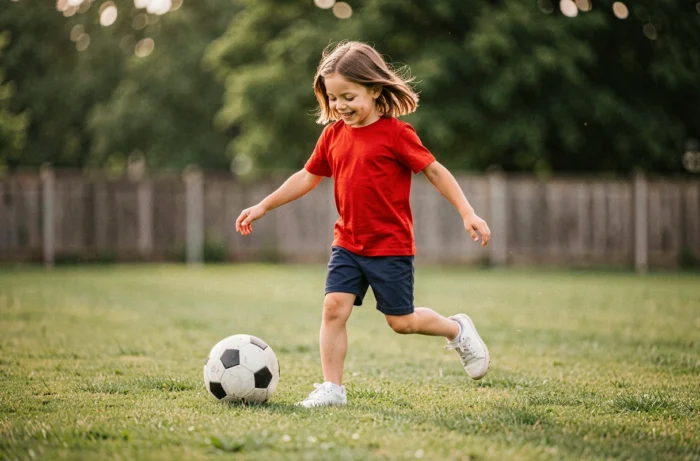
The introduction of children to sports is primarily based on a distinction that is often overlooked: before the age of five, free movement and daily active play are more important than enrolling in a structured discipline. Recent recommendations in child health place spontaneous motor skills (crawling, climbing, running, rolling) at the center of physical development for toddlers, well before the concept of “classes” or “sessions”.
Overtraining and early specialization: limits to set early
A child is not a miniature adult. Their bones, growth cartilages, and tendons tolerate repetitive movements and heavy loads less well. Focusing a six or seven-year-old on a single sport multiple times a week increases the risk of overload injuries, particularly in the knees, ankles, and back.
Early specialization weakens more than it advances. Field reports published in 2026 emphasize a simple principle: maintain at least one complete rest day per week and plan off-season breaks. These recovery periods do not hinder progress; they protect growing structures.
Varying disciplines until pre-adolescence allows for the engagement of different muscle chains, the development of varied motor patterns, and the reduction of monotony. A child who swims in winter and practices athletics in spring works on coordination, endurance, and flexibility without overworking the same joints. Resources dedicated to the sports awakening of toddlers are available at https://www.baby-sport.fr/, which details age-appropriate activities.
Active play before six: laying motor foundations without formal sessions
Between the ages of one and five, the goal is not to learn a technical gesture. It is to allow the child to freely explore the space, test their balance, fall, and get back up. Climbing a slope, jumping into a puddle, kicking a ball in a public park: these everyday situations build proprioception, laterality, and hand-eye coordination much more effectively than a structured class too early.
Daily active play advantageously replaces organized sports before the age of five. Recent child health guides recommend several hours of movement per day for this age group, in varied and unstructured forms. An improvised course with cushions on the floor, a run in a park, or a free dance session in the living room are sufficient.
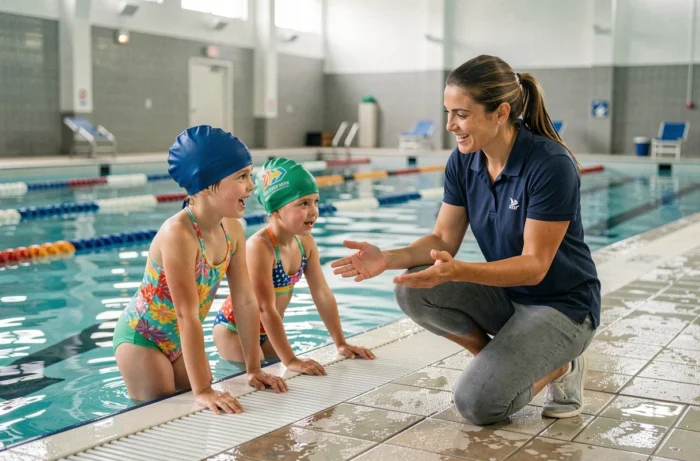
From the age of four or five, supervised activities like baby-gym, aquatic awakening, or collective motor courses can complement this foundation. The condition: the format must remain playful, the sessions should last less than an hour, and the child should be able to leave without pressure if they are not interested.
Choosing a sport for children: concrete criteria beyond personal preference
Letting the child choose “the sport they like” seems obvious, but several practical criteria should be checked before enrollment.
- The qualification of the coaching staff: a specific diploma for supervising young audiences (such as BPJEPS with a focus on activities for all or a federal youth diploma) ensures a pedagogy adapted to growth.
- The adaptation of equipment to the child’s morphology: properly sized shoes, fitted protective gear, lightweight balls. Inadequate equipment increases joint fatigue and the risk of injury.
- The geographical proximity and frequency of trips: a club forty minutes away turns each training session into a logistical constraint. The regularity of practice also depends on ease of access.
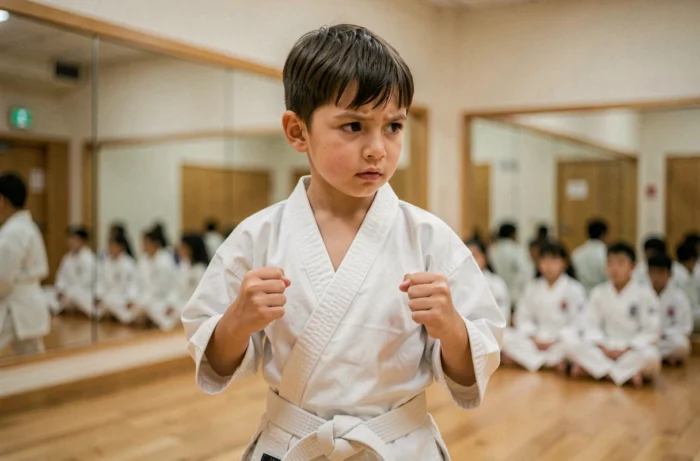
Team sports (football, basketball, handball) develop group awareness and acceptance of rules. Individual sports (swimming, gymnastics, athletics) strengthen autonomy and personal effort management. No category is superior to another. The best sport for a child is the one they want to return to every week.
Preventing sports injuries in children: concrete actions
Prevention is not limited to warming up. It starts with an up-to-date medical certificate, which can detect potential contraindications (heart murmurs, postural asymmetry, hyperlaxity). Then, several habits significantly reduce the risk of injury in young athletes.
A gradual ten-minute warm-up before each session prepares muscles and joints for exertion. Gentle joint movements, a gradual increase in intensity, and a few balance exercises are sufficient. Prolonged static stretching before exertion, once recommended, is now questioned for children: dynamic mobilizations are preferable.
Regular hydration, even in cool weather, remains a often overlooked point. A child feels less thirsty than an adult during exertion. Offering them water frequently during activity is a simple and effective reflex.
Warning signs to watch for
- A pain that returns to the same spot after each session, even if mild, indicates a possible mechanical overload.
- A sudden drop in enthusiasm, repeated crying before training, or refusal to go to the club may indicate discomfort related to pressure (from parents, coaches, peers).
- Persistent fatigue outside of training days may indicate an activity volume that is too high for the child’s age.
Listening to the child takes precedence over the sports calendar. A child who asks to take it easy is not expressing laziness; they are signaling a physiological or psychological limit that an adult must respect.
Pass Sport 2026: a focused aid for low-income families
The Pass Sport program has evolved for the 2026 school year. Eligibility is no longer based on the back-to-school allowance but on a CAF or MSA family quotient capped. This change refocuses aid on families with the lowest incomes and alters the scope of beneficiaries compared to previous years.
The amount and specific conditions vary according to the budgetary decisions of the current year. Checking eligibility directly with the CAF or MSA remains the most reliable step before enrolling a child in a club.
This aid covers part of the license or membership fee in a sports club affiliated with a federation. It does not fund equipment, camps, or non-federated leisure activities. This is a point to anticipate in the overall budget for the sports season.
The sports initiation of a child relies less on the choice of the club than on the quality of the framework established around the practice. One rest day per week, appropriately sized equipment, trained supervision, and the right to change one’s mind constitute a stronger foundation than any prestigious enrollment.