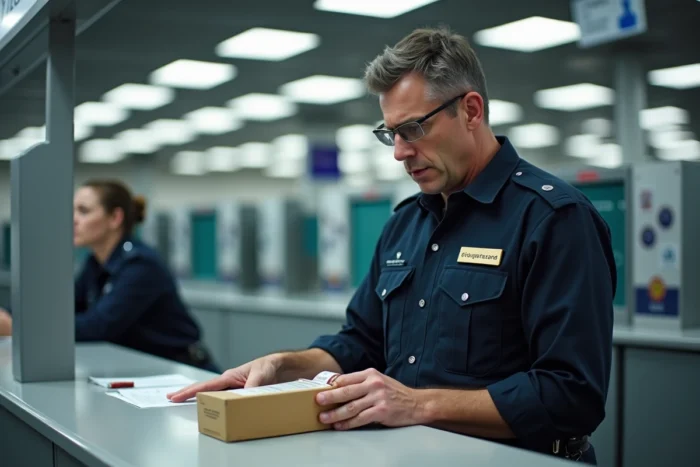
We just returned from a weekend in Figueras or Barcelona, and the trunk contains three cartons purchased from an estanco. At the toll booth in Perthus, a customs officer signals to pull over. The question is no longer “how many cartons am I allowed to bring back,” but “how can I prove that this tobacco is for me.”
Since the decree of March 27, 2024, French regulations on cigarette cartons from Spain have changed their logic. Let’s take stock of what this concretely implies at the border crossing.
Customs checks on return from Spain: what has changed on the ground
Before March 2024, the rule was simple (and rigid): one carton per person, period. The decree of March 27, 2024, removed this fixed ceiling to align with European law. In theory, an adult individual can carry up to 800 cigarettes, or four cartons, without the quantity alone triggering a presumption of commercial use.
To fully understand the current legal framework, it is useful to consult the details on cigarette cartons from Spain and French law.
In practice, French customs have not eased their scrutiny. Several sources report an intensification of checks in the border area since the reform. Officers no longer just count the cartons: they assess a range of indicators.
The threshold of 800 cigarettes remains indicative. It does not constitute an automatic right. If a customs officer believes your purchase has a commercial character, the burden of proof shifts to the traveler beyond this threshold. In other words, it is up to you to demonstrate that the tobacco is intended for your personal consumption.

French customs and tobacco from Spain: the 12 criteria of the 2024 decree
The decree lists 12 criteria that agents can cross-reference to assess the purpose of a purchase. Not all of them are systematically encountered during a check, but knowing them helps avoid unpleasant surprises.
- The quantity transported, relative to the number of adult occupants of the vehicle. Four cartons for a solo driver attract more attention than four cartons divided between two adults.
- The frequency of border crossings. Regular round trips to Spain, even with modest quantities each time, can tilt the assessment towards commercial use.
- The packaging of the products: presence of multiple different brands, cartons still in their original cellophane stacked in large quantities, or conversely, a single type of cigarettes consistent with personal consumption.
- The documents in your possession, particularly the receipts from the estanco. Always keep them on you.
- Your professional status and your final destination. A journey that does not correspond to a logical tourist trip raises questions.
Field reports vary on this point, but several travelers report that the distribution of cartons in the vehicle is examined. Packages stored in a personal bag are consistent. A whole box in the trunk, less so.
Receipts and proof of personal purchase
It cannot be repeated enough: always keep your proof of purchase. The receipt from the Spanish estanco is your first line of defense. It proves the location, date, quantity, and price paid. Without this document, your word alone against a customs officer carries little weight.
If you are traveling with others, ideally each adult should have their own receipt for their own cartons. A single overall receipt for eight cartons divided between two people complicates the demonstration.
Customs penalties on tobacco: what we really risk
When customs consider that the transport has a commercial character, the consequences go beyond simple confiscation. The tobacco is seized, and the fine can reach several times the value of the products.
The confiscation applies to all tobacco transported, not just the excess portion. If you are driving with six cartons and the officer concludes commercial use, all six cartons are taken, not just the two above the indicative threshold.
Reselling Spanish tobacco in France: a criminal offense
Buying cartons in Spain to resell in France, even to acquaintances, even “at cost,” constitutes smuggling. This is not a minor customs offense. The sale of tobacco is a state monopoly exercised by licensed tobacconists. Any resale by an individual exposes them to criminal prosecution, with substantial fines and a risk of a criminal record.
Price of tobacco in Spain and the differential with France: why it attracts
The price differential between the two countries remains the main driver of these cross-border purchases. A carton of cigarettes costs significantly less in a Spanish estanco than in a French tobacco shop. This gap, which can be measured in dozens of euros per carton depending on the brands, makes the trip worthwhile even when accounting for fuel for a border resident.
However, Spain has initiated a policy of gradually increasing tobacco taxation. Spanish prices are rising regularly, which slowly reduces the advantage. The differential remains significant but is narrowing year by year.
For a smoker living near the border, bringing back four cartons legally represents a real saving. For someone living in Paris and considering a detour to the Spanish border solely for tobacco, the calculation is less clear once tolls, gas, and travel time are factored in.
The framework established by the March 2024 decree provides real flexibility for travelers, but this flexibility relies on good faith and the ability to prove it. Four cartons per adult, receipts in pocket, a journey consistent with a tourist or family trip: this is what distinguishes a peaceful holiday return from a check that goes wrong.