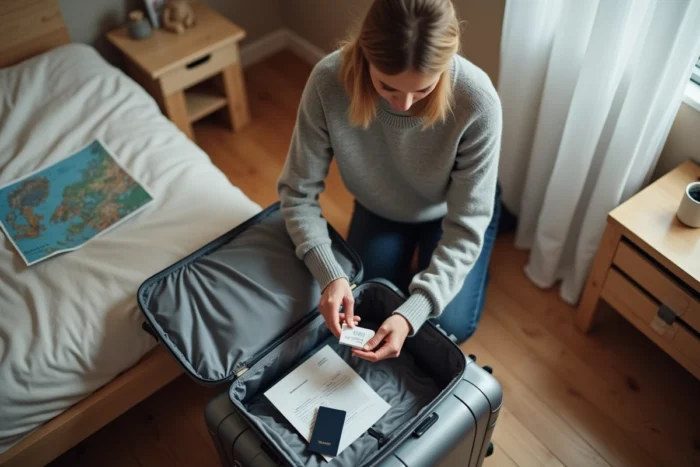
Paracetamol is neither a narcotic nor a psychotropic. This distinction changes everything for crossing the Norwegian border: the documentary obligations circulating in general guides actually concern controlled substances, not simple analgesics. Here we detail the technical points that most travel articles confuse or overlook.
Paracetamol and Schengen classification: what the law really provides
Norway applies Schengen rules regarding the transport of medications for personal use. The so-called “Schengen certificate” (or “pillepas” in Nordic countries) only concerns medications containing narcotics or psychotropics. Paracetamol, classified as a non-euphoric analgesic, does not fall under this regime.
In practical terms, a traveler carrying only paracetamol from France has no obligation to produce a Schengen medical certificate. As specified by the guide by Voyagoo, the limit remains set at a quantity corresponding to three months of personal treatment, in the original packaging.
We regularly observe confusion between the formalities applicable to opioids (codeine, tramadol) and those for paracetamol alone. A paracetamol/codeine tablet, however, falls into the category of narcotics and requires the certificate. The associated active molecule determines the legal regime, not the commercial name of the product.

Authorized quantities and Norwegian customs control
Three months of personal treatment: this is the ceiling that Norwegian customs apply to medications imported by an individual. For self-medicated paracetamol, this corresponds to a volume that agents assess based on dosage and standard dosage.
Norwegian customs officers do not just count the boxes. They check the consistency between the quantity transported, the duration of stay, and the presence of the original packaging with instructions. A suitcase containing a dozen boxes of paracetamol for a one-week stay will raise questions, even if the product is not regulated as a narcotic.
What customs check in practice
- The intact original packaging, with the name of the molecule legible (INN paracetamol, not just the French brand)
- The consistency between the quantity transported and the declared duration of stay, assessed on a case-by-case basis
- The absence of mixing with controlled substances in the same container or blister
In case of doubt, the officer may confiscate the surplus without complex procedures. We recommend keeping a copy of the prescription if the doctor has prescribed extended treatment, even for paracetamol: it serves as proof of dosage and thus quantity.
Over-the-counter paracetamol in Norway: more restricted access than in France
Some medications available without a prescription in France are only available with a prescription in Norway. Paracetamol remains accessible in Norwegian pharmacies (apotek) without a prescription, but the packaging sold is smaller than in France. The e-resept system (electronic prescription) also regulates the dispensing of most prescribed medications.
Some supermarkets and gas stations in Norway sell paracetamol in very small packages. The price per tablet is significantly higher than in French pharmacies. Taking a reasonable quantity avoids both local overpricing and the risk of not finding the usual dosage.
Difference in dosage and INN
The international non-proprietary name (INN) “paracetamol” is the same in Norway and France. However, the commercial names differ: Panodil or Paracet replace Doliprane or Efferalgan. If a Norwegian healthcare professional asks about your treatment, use the INN rather than the brand to avoid any confusion.
Travel insurance and medical coverage in Norway
Healthcare in Norway is recognized for its quality but also for its high cost. The European Health Insurance Card (EHIC) covers necessary care, as Norway is a member of the European Economic Area. It does not cover repatriation or costs exceeding those of the public healthcare system.
Without supplementary insurance, emergency expenses remain the responsibility of the traveler. In remote areas, the intervention of a rescue helicopter can represent a considerable cost. We recommend checking the coverage of travel insurance before departure, especially for stays in rural or Arctic areas.
- Request the EHIC at least two weeks before departure from the French health insurance
- Check that the travel insurance covers medical repatriation from Norway
- Keep a copy of the prescription and the INN of ongoing treatments with you, even for medications not subject to certification
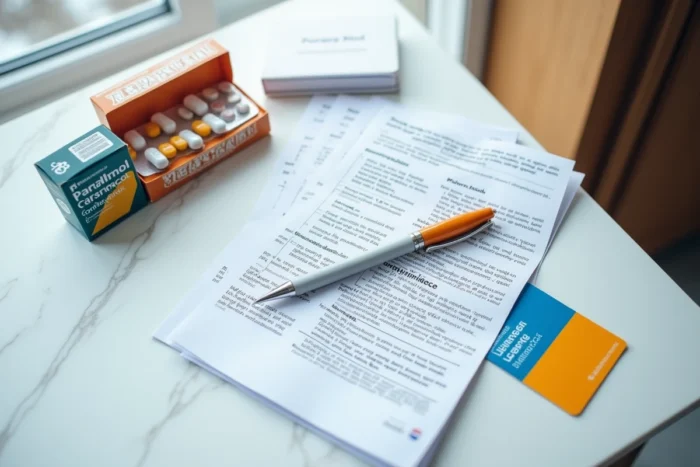
Medications associated with paracetamol: the trap of codeine and tramadol
The real customs risk does not come from paracetamol alone, but from combinations containing an opioid. A paracetamol/codeine tablet (like Codoliprane) or a paracetamol/tramadol tablet (like Ixprim) falls into the category of narcotics under the Schengen convention.
For these products, the Schengen certificate issued by the ARS is mandatory. It must be requested before departure and covers a maximum travel duration of thirty days. Without this document, the medication may be seized at the border, and the traveler may face administrative penalties.
Sorting out your medicine cabinet before departure remains the most effective precaution. Physically separating simple paracetamol from codeine combinations facilitates customs control and prevents an officer from confusing the two.
The Norwegian border treats paracetamol as what it is: a common analgesic, without special regulation, as long as the quantity remains consistent with personal use. Complications almost always arise from confusion between paracetamol alone and combinations containing controlled substances. Checking the exact composition of each box before packing remains the simplest and most protective action.